US working on plan to secure Strait of Hormuz, White House says
BY REUTERS
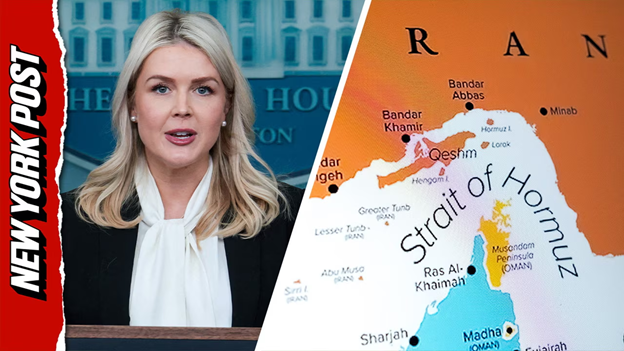
The United States is actively working on plans to secure the Strait of Hormuz and ensure safe passage for oil tankers, White House Press Secretary Karoline Leavitt said as tensions with Iran continue.
Leavitt declined to provide a timeline but said the Departments of Defense and Energy were closely coordinating and regularly briefing President Donald Trump. She added that the U.S. Navy could escort oil tankers through the strategic waterway if necessary.
Asked about the possibility of deploying U.S. ground troops to Iran, Leavitt said such a move was not part of the current operational plan. However, she stressed that the President would not take military options “off the table,” saying decisions would depend on how the situation develops.
Leavitt also rejected reports that the Trump administration was considering arming Kurdish forces to spark a popular uprising inside Iran, calling such claims “completely false.” She confirmed the President has spoken with regional partners, including Kurdish leaders in northern Iraq, but denied any agreement on such a strategy.
The Strait of Hormuz, a major oil export route, has come into renewed focus after the United States and Israel attacked Iran on Saturday (February 28), in a development that could lead to a closure of the sea channel for days.
The Strait lies between Oman and Iran and links the Gulf north of it with the Gulf of Oman to the south and the Arabian Sea beyond. It is 21 miles (33 km) wide at its narrowest point, with the shipping lane just 2 miles (3 km) wide in either direction.
About a fifth of the world’s total oil consumption passes through the Strait. More than 20 million barrels of crude, condensate and fuels passed through the strait daily last year on average, data from analytics firm Vortexa showed.
Oil prices continued to climb on Wednesday (March 4) as Tehran attacked ships and energy facilities, closing navigation through the Strait of Hormuz, forcing production stoppages in countries from Qatar to Iraq and halting exports.
The Strait is under the “full control” of Iran’s navy, its Revolutionary Guards said on Wednesday, warning vessels not to transit the waterway, according to the semi-official Fars news agency. Its claim of having struck 10 tankers that ignored warnings could not be independently verified.
Trump risks political fallout if higher energy prices persist, as his Republican Party tries to retain power in the congressional midterm elections in November.