Rising oil prices may drag 1.34M Filipinos into poverty -PIDS
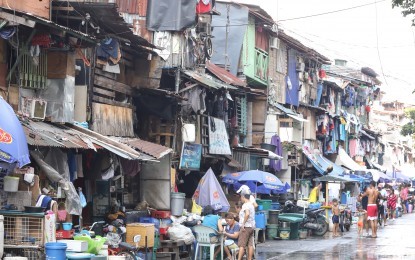
The Philippine Institute for Development Studies (PIDS) , a government run research institute, said about 1.34 million Filipinos could end up in poverty due to “economic shocks” resulting from the rising global oil prices amid the Middle East war.
“A simulation of current oil price conditions,” the PIDS said its assumption reflects “current scenario” with crude oil at $105 per barrel and a 35% pass-through to domestic prices.
“Under this setup, the national poverty rate is projected to rise from 13.2% in 2025 to 14.4%, reversing recent gains,” PIDS said in a news release.
This, as about 30% of Filipino households are vulnerable to falling into poverty—including segments of the middle class—highlighting how large parts of the population remain exposed to economic shocks.
“The increase in poverty is expected to come largely from households just above the poverty line—the so-called near poor—who are most at risk of slipping into poverty as daily expenses rise,” the PIDS said.
Moreover, the policy think tank said that while higher-income households may lose more in peso terms, poorer families absorb the heavier blow because they spend most of their income on essentials and have little to no savings.
“The study estimates that poor households could lose as much as 16.2% of their annual income in real purchasing power, compared to only 3.4% among the richest households,” the PIDS said.
Beyond the “current scenario,” the think tank’s analysis outlines what could happen if the crisis worsens.
“If oil prices climb to $125 per barrel, up to 2.35 million Filipinos could fall into poverty. At $145 per barrel, the number could reach 3.50 million, with sharper increases in rural areas,” it said.
The PIDS noted that directing support toward poorer and near-poor households is more responsive to the distributional impact of the shock.
“These potential target groups include 4 million households already identified in social protection systems, 1.6 million eligible but currently uncovered families, and about 6.5 million vulnerable households outside existing lists, such as minimum-wage workers, persons with disabilities, and newly identified poor households,” the think tank said.