Marcos Jr. declares state of national energy emergency
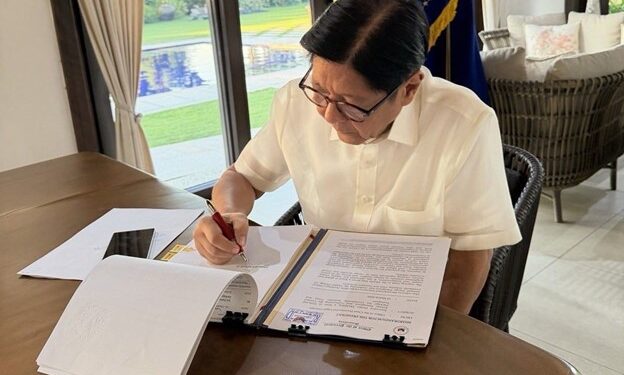
President Ferdinand Marcos Jr. signed Executive Order (EO) No. 110 declaring a state of national energy emergency, due to the ongoing unrest in the Middle East that posed an “imminent danger… upon the availability and stability of the country’s energy supply.”
Marcos Jr. declaring an emergency through an EO came after his administration through his spokesperson Atty. Claire Castro insisted that there is “no oil crisis” in the Philippines and claimed that steep spikes in pump prices were only due to “price disruption.”
“The Secretary of Energy (DOE) has determined that the foregoing circumstances pose an imminent danger of a critically low energy supply and that urgent measures are necessary to ensure the stability and adequacy of the country’s energy supply,” the order read.
“The declaration of a state of national energy emergency will enable the government… to implement responsive and coordinated measures under existing laws to address the risks posed by disruptions in the global energy supply and the domestic economy,” it read.
The National State of Energy Emergency will “remain in force and effect for one year.”
The Order did not specifically mention if the government would place a price ceiling on petroleum products, but under the law, the Philippine President may bypass several procedures to control prices or fast track the procurement of certain commodities.
The Department of Energy (DOE) has been authorized to “take appropriate measures… to mitigate the effects of disruptions in global energy supply markets,” according to the executive order.
The DOE, the Philippine National Oil Company (PNOC), and the PNOC-Exploration Corporation (PNOC-EC) are now allowed to “make advance payment of an amount exceeding 15 percent of the contract amount” when “deemed necessary,” it read.
Other measures that the DOE may undertake include “implementation of fuel and energy optimization plans such as prudent energy management and load adjustments… enforcement of appropriate energy conservation measures” and policies to “ensure the stability of energy supply and mitigate the impact of rising fuel costs on electricity generation and consumer prices.”
Meanwhile, the Department of Transportation (DOTr) is ordered to expand the Libreng Sakay Program (free rides), extend the operating hours of government-run train lines in Metro Manila and “establish priority transport lanes in coordination with relevant local government units… to reduce dependence on petroleum products.
Marcos Jr. has also ordered the creation of the “Unified Package for Livelihoods, Industry, Food, and Transport (UPLIFT) to safeguard national interest by ensuring the stability of domestic energy supply, the uninterrupted delivery of essential services, the continuity of economic activity, and the welfare of all citizens.”
The DSWD, DA and the Department of Migrant Workers (DMW) are tasked to ensure that the release of aid packages to their respective constituencies will be expedited, while the Department of Trade and Industry (DTI) shall monitor and address “excessive or unreasonable price increases on basic necessities and prime commodities.”
The UPLIFT will serve as the “whole-of-government response framework… to support consumers and affected sectors to be implemented by concerned agencies,” the EO read.
A so-called UPLIFT Committee will also be convened with the following members:
– Chairman: President of the Philippines
– Members:
– Executive Secretary
– Secretary, Department of Energy (DOE)
– Secretary, Department of Transportation (DOTr)
– Secretary, Department of Social Welfare and Development (DSWD)
– Secretary, Department of Agriculture (DA)
– Secretary, Department of Finance (DOF)
– Secretary, Department of Economy, Planning, and Development (DEPDev)
– Secretary, Department of Budget and Management (DBM)
The Executive Order also urges the private sector to coordinate with the government to create industry or business policies that would “lessen transportation demand and costs.”
Marcos Jr.’s executive order comes nearly a month after Iran closed portions of the Strait of Hormuz — where 20 percent of the world’s oil supply passes through — in retaliation against air strikes from US and Israeli forces.
Malacañang has also been urged to sign a measure that would allow the President to either suspend or reduce excise taxes on oil, but the Palace has yet to comment if Marcos Jr. has already signed the policy he deemed as urgent.