Don’t miss the last supermoon of 2025 on December 4
BY YAHOO NEWS
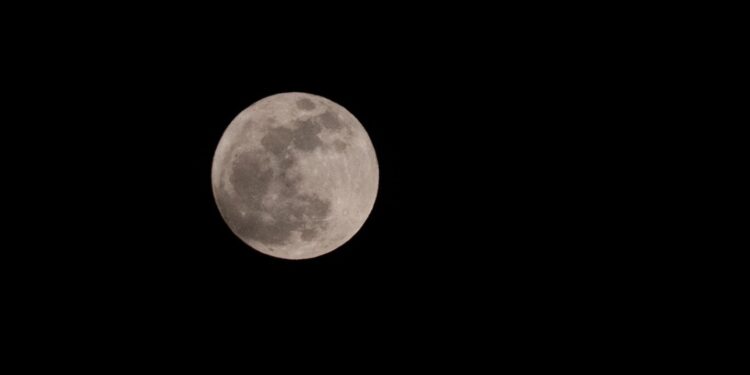
Look east on the night of December 4 and you will see the final supermoon of 2025.
Supermoons occur when a full moon coincides with the moon’s closest approach to Earth, known as the moon’s perigee. The moon then appears up to 10% larger and much brighter than usual.
On December 4, 2025, the moon will be around 17,000 miles (27,300 kilometers) closer to Earth. This supermoon is also known as a “cold” full moon because it marks the start of colder, darker months ahead.
A ‘moon illusion’ on the horizon
If skies are clear, the moon may appear larger than it usually does as it rises over the horizon. But to most people, the difference will be indiscernible.
However, when the moon does appear to be larger, it is due to what is known as a moon illusion— a strange phenomenon for which there is little scientific explanation.
But the illusion means humans perceive objects at the horizon as being larger than they usually appear to our eyes — and the same is then true for objects we hold up, in line with the moon, on the horizon.
You may also see a yellow tinge to the moon, visible as it rises over the horizon.
This happens because light reflected by the moon at the horizon travels a greater distance to reach our eyes, compared to when the moon appears higher in the sky.
The longer path for the light means short, blue wavelengths scatter, leaving predominantly red wavelengths that reach our eyes.
As the moon rises in the sky, and the distance for the light to travel reduces, the moon appears to be bluer in color.
What’s in a full moon’s name?
We tend to refer to these phases of the lunar cycle simply as full moons.
But each full moon has descriptive name that relates to the time of year it occurs.
The names, listed below, are mainly based on North American traditions — both indigenous and colonial — but have become common, globally.
The 12 full moon names are:
January: Wolf Moon
February: Snow Moon
March: Worm Moon
April: Pink Moon
May: Flower Moon
June: Strawberry Moon
July: Buck Moon
August: Sturgeon Moon
September: Corn Moon
October: Hunter Moon
November: Beaver Moon
December: Cold Moon
When is the first supermoon in 2026?
We can expect to see three supermoons in 2026, with the first occurring just days into the New Year — the Wolf Moon on January 3 will be a supermoon, too.
Then, we will have a long wait until November 24 for a Super Beaver Moon and another Super Cold Moon on December 24, 2026.
Look out for Geminids and Ursids, too
While 2025’s Super Cold Moon may be short-lived for some, there is more for stargazers to enjoy in December. These include Geminid and Ursid meteor showers.
The Geminids appear near the constellation of Gemini, starting December 4 and continuing until December 20, 2025. They will peak on December 14, with up to 120 visible meteors each hour.
The Ursids, also known as the Little Bear or Little Dipper, radiate near the star Ursa Minor Beta in the constellation of Ursa Minor. They will shower between December 17-26, 2025, but with only a dozen or so visible each hour.
Annual meteor showers visible in 2026
There will be plenty to see in the night sky next year, including about a dozen meteor showers, according to Royal Museums Greenwich.
Quadrantids, visible December 28, 2025, until January 12, peaking on January 4 near the constellation Boötes.
Lyrids, visible April 16-25, peaking on April 22, near the constellation Lyra.
Eta Aquariids, visible April 19-May 28, peaking May 6, near the star Eta Aquarius in the constellation Aquarius.
Delta Aquariids, visible July 12-August 23, peaking July 30, near the star Delta Aquarius.
Perseids, visible July 17-August 24, peaking August 13, near the constellation Perseus.
Draconids, visible 6-10 October, peaking 9 October, near the constellation Draco.
Orionids, visible October 2 until November 7, peaking October 21, near the constellation Orion.
Taurids, visible September 10-November 20 in the southern hemisphere, October 20-December 10 in the northern hemisphere, near constellation Taurus.
Leonids, visible November 6-30, peaking November 18, near constellation Leo.
Geminids, visible December 4-20, peaking December 14, near constellation Gemini.
Ursids, visible December 17-26, peaking December 22, near constellation Ursa Minor.
2 solar eclipses in 2026
An annular solar eclipse will take place on February 17. It will be great viewing for researchers in Antarctica, but not for many others.
Those in the Patagonia region of Chile and Argentina (south of El Calafate), South Africa, Lesotho, Eswatini, Zimbabwe, Mozambique, Madagascar, and the southern regions of Namibia, Botswana, Zambia, Malawi and Tanzania, will only see a partial eclipse.
A total solar eclipse will occur on August 12, visible in Spain, Iceland, Greenland and northern Russia. A partial eclipse will be visible in North America, North and West Africa, the UK, Ireland, western and central Europe.