Deadly heat turns Japan’s farmers nocturnal
BY REUTERS
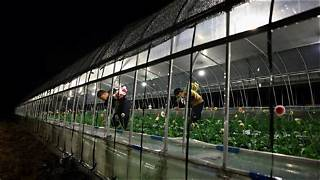
Long after sunset, Motoaki Iijima’s illuminated greenhouse north of Tokyo glows like a lantern as the flower farmer harvests pink and orange gerberas, avoiding a daytime sun fierce enough to be deadly.
Three summers ago, after a part-time worker suffered heatstroke picking sunflowers in his greenhouse, Iijima made a dramatic change.
“We were concerned about our workers’ physical safety, and even their lives, since temperatures are rising every year, so we decided to switch to harvesting and doing other tasks at night,” the 36-year-old said.
Japan is particularly vulnerable among advanced economies. Around 70% of farmers are aged 65 or older, a population especially susceptible to heat stress. High humidity further amplifies the danger.
“We’ve gradually become nocturnal. It’s about protecting our bodies, and ultimately, our lives,” Iijima said.
The risks explain why Miyoko Asada, a 68-year-old worker on Iijima’s farm, starts work shortly after sunrise.
“It’s because it’s cooler in the morning. Getting up is a struggle but when I think about the heat, mornings aren’t so bad at all,” she said while picking asters.
A few towns away, poultry farmer Tetsuya Usuba faces a different crisis. Six summers ago, he lost over 500 laying hens to heatstroke during a three-day spell of intense heat. The experience still haunts him—he and his father had to use a forklift fitted with a giant bucket to remove the dead birds from the barn.
“Around here there are many days when the maximum temperature goes over 35 degrees Celsius. Chickens don’t tend to eat when it’s hot, and it’s very hard to make them eat at times when they’re not doing it by themselves,” he said.
As a result, Usuba has resorted to waking his flock at 2:30 a.m., encouraging the 4,400 caged hens—95% of birds in Japan are reared this way—to eat before oppressive heat suppresses their appetites. He has installed additional fans, sprays cooling water on the barn’s metal roofs, and adds citric acid to the hens’ drinking water to fight dehydration.
Still, when temperatures suddenly spiked above 35 degrees Celsius last month, he lost 130 birds.
“It’s certainly become harder to raise chickens, year on year,” Usuba said.