Senate impeachment court elects Escudero as presiding officer
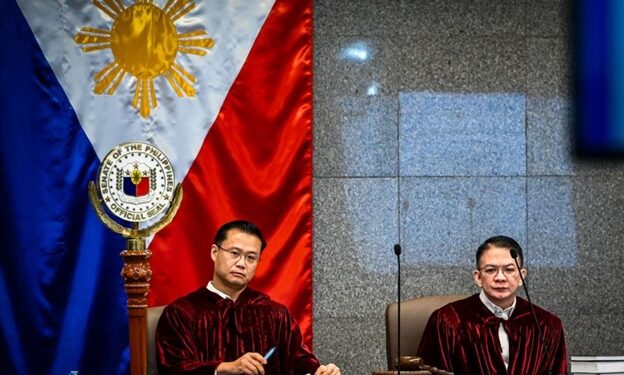
Senator Francis Escudero was elected by the Senate impeachment court as its presiding officer for the trial of Vice President Sara Duterte.
Escudero replaced Senate President Sherwin Gatchalian as chair of the court ending speculations that he would eventually preside over the trial, an option that was made available by an amendment to the rules.
In his speech, Escudero vowed that the court would be “guided with prudence, tempered with caution, and marked with unquestionable impartiality” in conducting the months-long proceedings.
He said senator-judges “must avoid even the appearance of impropriety and observe the cold neutrality of an impartial judge at all times.”
He also clarified that he “did not seek nor did I ask for this responsibility,” while also stressing he would fulfill his duty “without fear or favor.”
Escudero was instrumental in the Gatchalian bloc’s effort to break the Senate impasse on June 3 and allowed the chamber to convene again as a legislative body by forming a quorum of 12.
There, senators adopted a rule allowing the Senate as an impeachment court to pick a different presiding officer for non-presidential trials.
Escudero later said that the impeachment court will follow the constitutional mandate requiring a two-thirds vote of members — 16 of 24 — for a conviction.
He however said that parties have the liberty to question the conviction threshold, given the absences of some senators, before the Supreme Court.
He said the Senate impeachment court will honor any ruling of the high court.
Senate Minority Leader Alan Peter Cayetano had objected to the election of a presiding officer, saying the Senate president must take the helm of the impeachment trial.
In response, Gatchalian explained that the Senate had passed a resolution amending its rules to allow a different presiding officer for the impeachment trial.
Cayetano and his sister, Sen. Pia Cayetano, argued that the 1987 Constitution requires the Senate president to preside over impeachment trials except when a president is facing trial. In that case, the Supreme Court chief justice would be presiding officer.
Sen. Francis Pangilinan and Senate President Pro Tempore Vicente Sotto III said that the constitution does not specifically say that only the Senate president can be presiding officer.
Minority Leader Cayetano said after the vote that he will register a continuing objection to the election of a presiding officer other than the Senate president.