Philippines lost bid for UN Security Council non-permanent membership
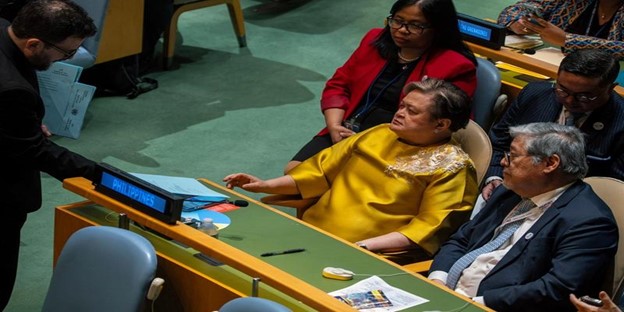
The Philippines lost the two-year term in the 15-chamber UN panel to Kyrgyztan after 4 rounds of voting during the United Nations June 3 session.
Despite years of campaigning, Zimbabwe, Austria, Portugal, Trinidad and Tobago, and Kyrgyzstan were named new members of the UNSC, which can issue legally binding resolutions that may include military action, economic sanctions, and deployment of peacekeeping operations.
A fourth round of votes was cast for UNSC members to choose between the Philippines and Kyrgyzstan, in the Asia-Pacific Group, after they failed to reach the required two-thirds of the majority.
Kyrgyzstan eventually achieving the necessary two-thirds majority and securing its first-ever Security Council seat by 142 votes to 49.
The remaining 10 members are elected, with five new members joining every year. This year, one comes from the Africa Group, one from the Latin American and Caribbean Group, one from the Asia-Pacific Group, and two from the Western European and Others Group.
Bahrain, Colombia, Democratic Republic of Congo, Latvia and Liberia will continue to serve as non-permanent members of the Security Council until the end of 2027.
The Permanent Members are: China, France, Russia, the United Kingdom, and the United States.
The rest of the non-permanent members are: Bahrain, Colombia, Democratic Republic of the Congo, Latvia, and Liberia.
Last March, President Ferdinand Marcos Jr. made a personal pitch for the Philippines’ candidacy for a non-permanent seat on the United Nations (UN) Security Council, saying the country is ready to contribute as a voice of balance among the world’s nations and as a “voice for principled peace.”
Marcos Jr. expressed confidence that the Philippines has an advantage in its bid for a non-permanent seat on the United Nations Security Council.